
If you have teenagers, you’ve probably noticed energy drinks are everywhere right now. Monster, Celsius, Prime. Boys especially are pounding them.
Mine don’t drink them much (that I know of). It’s mostly when somebody is giving them away, and when they do, it’s usually Celsius, which is popular and also not cheap.
What caught my eye is that some of these don’t really look like energy drinks. Celsius markets itself as a fitness drink. Prime came out as a sports hydration drink on the back of a couple of YouTubers. If you’re a parent who isn’t paying close attention, you could look at either one and think it’s basically Gatorade.
So I looked into teens and energy drinks: how much caffeine is actually in these cans, what it does to a teenager, and how to bring it up without getting the eye-roll.
TL;DR: A 473 mL can of Monster has 164 mg of caffeine, and a U.S. can of Celsius has 200 mg. Health Canada’s daily limit for a 60 kg teen is 150 mg, so one Monster puts him over. Prime Hydration has no caffeine, but Prime Energy was recalled in Canada in 2023. Quebec bans energy drink sales to anyone under 16 starting in December.
What’s in the cans
Monster is the honest one. It’s a big black can with a claw on it, and nobody is mistaking it for a smoothie. A 473 mL can sold in Canada has 164 mg of caffeine.
Celsius, the one my boys go for, comes in a can that looks like it belongs next to the yoga mats. In the U.S. it has 200 mg of caffeine. Canada caps energy drinks at 180 mg a can, so ours come in a bit lower, but not by much.
Prime is two different drinks with the same name, which doesn’t help anybody. Prime Hydration has no caffeine. Prime Energy had 200 mg in its U.S. cans, enough that the Canadian Food Inspection Agency recalled it in July 2023. Prime said the Canadian version has 140 mg.
Now compare that to what Health Canada says: anyone under 18 should have no more than 2.5 mg of caffeine per kilogram of body weight a day. For a 60 kg kid, that’s 150 mg. One Monster and he’s over for the day.
To be fair, Health Canada also says older, heavier teens, 14 to 18, may handle caffeine more like adults. The American Academy of Pediatrics isn’t interested in that kind of nuance. Its position is that energy drinks have no place in a kid’s diet, full stop.
Who else is paying attention
Poison control has noticed. America’s Poison Centers reported a 24.2% jump in energy drink calls for kids and teens under 20 between 2022 and 2023. That’s U.S. data, but walk into any convenience store here and it’s mostly the same cans.
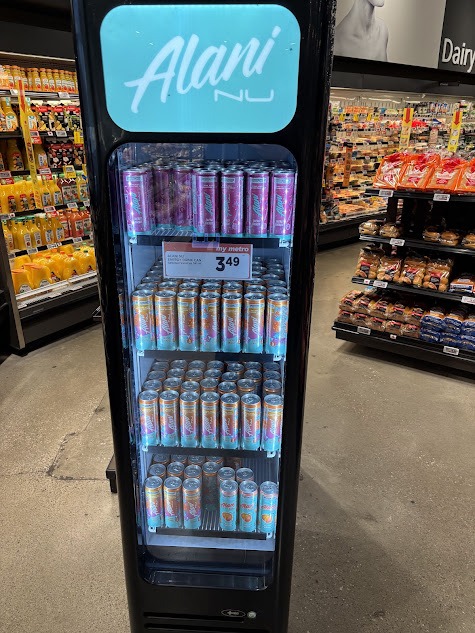
Texas is going after Celsius directly. In June 2026, the state’s Attorney General opened an investigation into Celsius and its Alani Nu brand over marketing to teens. That came after a family lawsuit alleged a 17-year-old died from an enlarged heart caused by too much caffeine. It’s still an allegation, but it’s not a great look for a fitness drink.
Closer to home, Quebec passed a law in June 2026 banning energy drink sales to anyone under 16, starting in December. It followed the death of a 15-year-old in 2024 who had a can of Red Bull along with his ADHD medication.
What the caffeine does
None of this is shocking if you’ve ever had one coffee too many. It’s the same racing heart, bad sleep and jittery mood, just in a kid whose heart is still developing.
Too much caffeine can push up blood pressure and cause irregular heartbeats. A can after school can still be keeping him up at midnight. It can bring on anxiety and mood swings too.
The one nobody really talks about is dependency. A kid who drinks these every day can get to the point where he needs one just to feel normal.
There’s also research in rats on caffeine and the developing brain, specifically the dopamine pathways tied to reward. I’m not a scientist, but it’s worth knowing about.
How to talk about it
The worst way to start is “you need to stop drinking these.” Teenagers can hear a lecture coming from a mile away, and talking to teenagers goes a lot better when it feels like a conversation.
Go with something like “I looked this up and found something worth talking about.” Then give them the numbers, 164 mg in a Monster and roughly 150 mg as a daily limit for a 60 kg kid, and let them work out what that means. Then let them be part of the decision.
My guys do check the numbers on cans for almost everything, so this fits right in except this time it’s not Diet Coke.
Reality check
Look, your kid is going to have an energy drink at some point, probably a free one, and one can isn’t a crisis.
Keep an eye on the habit instead. If it’s every day, or it’s standing in for sleep, that’s when it’s worth having the conversation.

